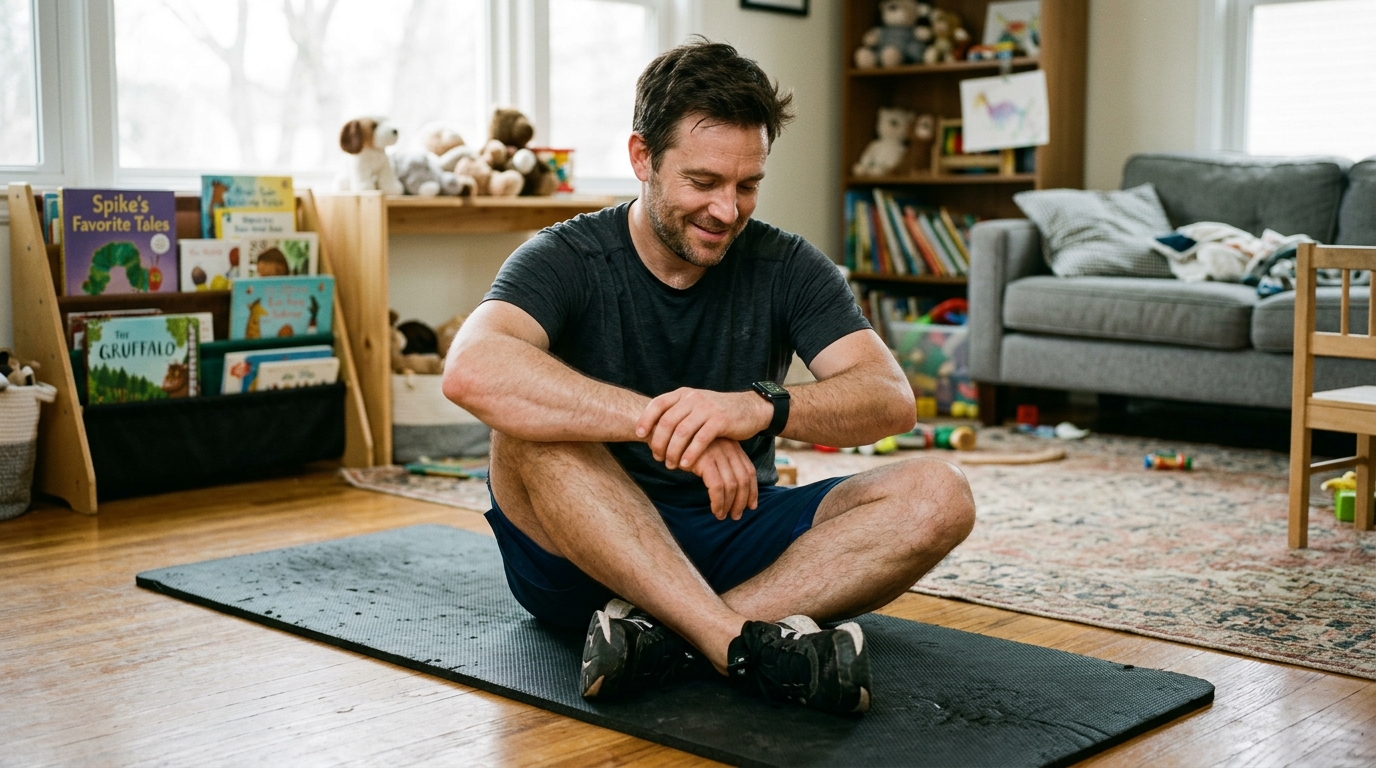
Every working father recognizes this quiet dilemma: On one side is the expectation to perform at your job and be fully present for your family after work. On the other side, your body is sounding alarms—lower back stiffness from hours at a desk, mid-afternoon energy crashes, and a creeping loss of basic stamina.
The fitness industry's default advice is notoriously disconnected from real family life: "Just wake up at 5:00 AM, or hit the gym at 9:30 PM after everyone is asleep."
For most parents running on limited sleep, that's not discipline—it's a fast track to burnout.
The true time cost of a commercial gym
If you tally up the actual minutes, a 60-minute session at a commercial gym almost never takes just 60 minutes:
- 20 minutes sitting in evening rush-hour traffic.
- 10 minutes changing and locating a locker.
- 60 minutes of training (including waiting for occupied benches or squat racks).
- 20 minutes showering and driving home.
That single workout consumes nearly two full hours. Two hours where your partner is left handling dinner prep and chores alone, or two hours where you miss tucking your kids into bed. The inevitable result: you either train with underlying guilt, or you quit altogether after three weeks.
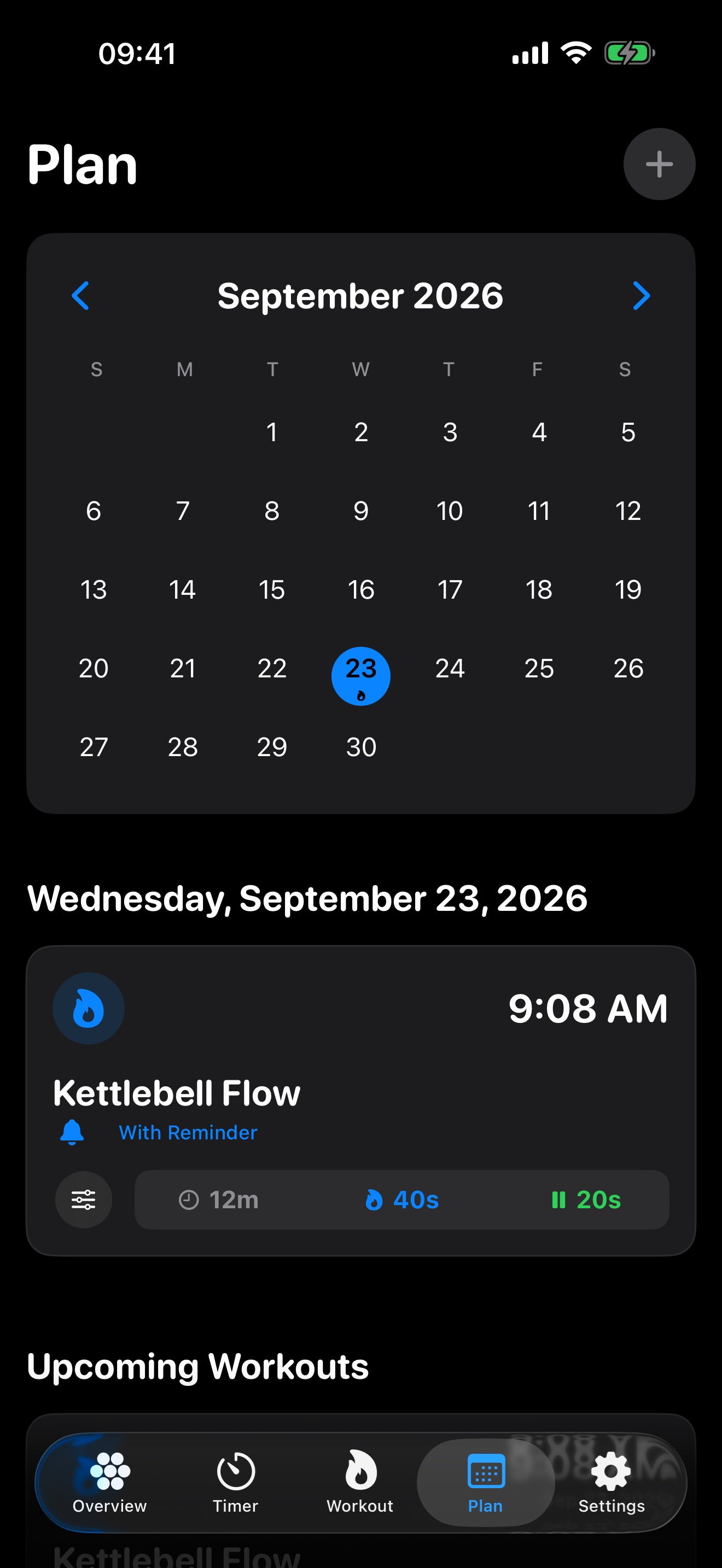
Commercial Gym vs. TimerCoach at Home:
- Commercial Gym: 20 min commute + 10 min locker + 60 min workout/waiting + 20 min return = ~110–120 minutes away from family.
- TimerCoach at Home: 3 min mat setup + 25 min high-density interval circuit + quick shower = 35 minutes total. You reclaim nearly an hour and a half every single workout day.
Children don't listen to lectures—they mimic behavior
There is an even deeper dimension to training at home that far outweighs the time saved: what your children witness.
You can give your kids endless speeches about healthy eating, limiting screen time, and the importance of resilience. But young kids rarely absorb lectures; they absorb visible habits.
When a father unrolls a mat in the living room three or four afternoons a week, hits start, and sweats for 25 focused minutes:
- Children see that physical exertion is a normal, positive part of adulthood.
- They realize that taking care of your body happens even when you're tired after work.
- They lose any hesitation around movement. They jump around on the carpet, try awkward push-ups, and proudly count down the seconds alongside you.
Fitness stops being a mysterious place somewhere in town where dad vanishes for two hours. It becomes a natural, shared part of everyday family life.
25 focused minutes beats 90 distracted minutes
A properly paced 25-minute interval workout at home—alternating high-intensity functional movements with strict recovery intervals—is often far more effective than 90 minutes of distracted machine-hopping at a gym.
The difference comes down to tempo:
- When the timer is ticking and each movement is announced clearly on your screen and in your ears, there is no wandering around, no checking work emails, and no scrolling between sets.
- You enter an unbroken rhythm: 45 seconds of work, 15 seconds of active rest.
- Your heart rate stays elevated, your stabilizing muscles do real work, and within half an hour you are showered, recharged, and back at the dinner table.
Consistency always wins over perfection
The goal isn't to train like an Olympic athlete for one intense month only to burn out or injure yourself for the next five.
The goal is to reliably show up three to four times every week for 25 focused minutes—regardless of how chaotic your workday was. That is why TimerCoach was built: to eliminate every barrier between your living room carpet and your first rep. Roll out the mat, tap your watch, and get it done.